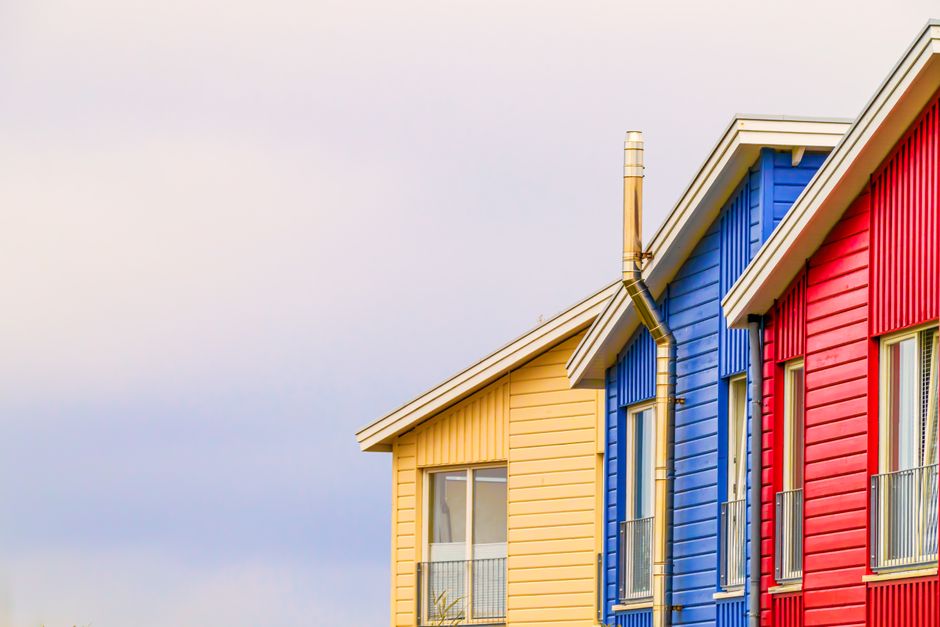

House Painting in Long Beach, CA

Notes on house painting in Long Beach, CA: colour and sheen for Craftsman and mid-century houses, coastal weather, and the prep that decides how long a paint job lasts.

What We Cover

House Painting in Long Beach, CA

Painting a house in Long Beach is shaped by the water. The marine layer keeps morning walls damp, salt air from the harbour and the beaches leaves a film on siding and stucco, and the afternoon sun fades dark colours on the south and west faces. A crew that works here learns to read the weather before it reads the colour chart.

Houses that need different treatment

The housing stock is mixed. Craftsman bungalows in California Heights and Bixby Knolls carry wood siding, exposed rafter tails and deep porch beams. Mid-century houses in Los Cerritos and around Belmont Shore are mostly stucco and board siding under low roofs. Each one asks for a different primer, a different sheen and a different order of work.

Prep comes before colour

Most failed paint jobs fail at the surface. Chalky stucco gets washed and primed, soft wood gets cut out and patched, and moving joints get caulk before a topcoat goes near them. Two coats over honest prep outlast one heavy coat over dust and salt, and a house near the Port of Long Beach or the Queen Mary shows that difference within a couple of seasons.

Colour and sheen on the coast

Light in Long Beach changes through the day, so a colour is judged on the wall at morning, noon and late afternoon. Flat or low eggshell suits large walls, satin suits trim, and semi gloss suits doors and rails. Dark bodies on exposed faces fade sooner, and the shaded side of a house near Naples or Signal Hill can carry a deeper colour than the sunny side.

Guides

The pages here cover colour choices for Craftsman and mid-century houses, trim and rafter prep, stucco patching, coastal weather, and how to read a written painting scope. The posts add longer local notes on timing, materials and common problems around Los Angeles County.

Latest Guides

A house wall being painted

How Do You Choose Interior Colours for Long Beach Rooms With Coastal Light?

2026-10-06

Interior colour looks different in Long Beach than it does under the lights of a paint store. The marine layer flattens morning light into a soft grey wash, the afternoon sun swings low and warm across the west wall, and rooms in an old bungalow in Bixby Knolls behave nothing like rooms in a mid-century house in Los Cerritos. A colour that looked right on a two inch card can turn muddy by ten in the morning and glow orange by five.

This post walks through how a painter picks interior colour for rooms that get coastal light, in the order the decisions actually get made.

Why does coastal light change the colour on the wall?

Paint does not have a colour of its own. It reflects whatever light reaches it, so the colour you see is the paint multiplied by the light. Under a marine layer, the light is diffuse and slightly cool. Rooms facing north or east can read blue or grey, and warm beiges lose their warmth. Under direct afternoon sun, the same beige turns yellow and the grey picks up a pink cast.

Two things make Long Beach rooms trickier than inland ones. First, the light changes quickly through the day. A June morning can start under thick cloud and finish in hard sun, and the wall has to look right through both. Second, the harbour and the water throw reflected light into rooms near the coast, around Belmont Shore and Naples, which adds a cool bounce that a card cannot show.

What does the age of the house change?

Craftsman bungalows in California Heights and Bixby Knolls usually have smaller windows, deep porches and dark wood trim. Rooms are lower in light, so a mid-tone colour that would feel calm in a bright room can feel heavy here. Plaster walls, common in the older houses, also soak up light and flatten the finish.

Mid-century houses near Los Cerritos and Rancho Los Alamitos have larger windows, flat ceilings and often a sliding door to a patio. They get more light, and more glare. Colours that look soft in an old bungalow can look stark in a house with a wall of glass.

How do you test a colour properly?

The method has not changed in decades, and the shortcuts are where most colour mistakes begin. Follow it in this order:

  • Brush the sample onto a piece of white board or poster board, two coats, so the base colour of the wall does not show through.
  • Tape the board to the wall, never paint a patch straight onto the wall, because the old colour changes how the new one reads.
  • Leave it up for at least three days, so it sees cloud, sun and lamp light.
  • Look at it at eight in the morning, noon and just before sunset, and again after dark under the room's own bulbs.
  • Move the board to the darkest corner and the brightest wall of the same room. A colour that survives both is a safe one.

Sample colours go on with a brush because a roller applies the paint thinner and the colour comes out lighter than it will on the finished wall.

How do undertones decide which colours work together?

Every neutral leans somewhere. Greys lean blue, green or violet. Beiges lean yellow, pink or green. White leans warm or cool. The lean is the undertone, and it is what causes a trim white to look dirty next to a wall colour, or a cream to look sickly beside a grey.

A quick way to see an undertone is to hold the sample next to a sheet of pure white printer paper. Beside true white, a grey that leans green looks green. A beige that leans pink looks pink. Once the lean is visible, the colours can be matched so that the walls, the trim and the ceiling all lean the same direction or are deliberately opposite.

The table below shows how the common coastal-light problems tend to resolve. It is a guide and not a rule, because every room has its own window and its own furniture.

Room situationWhat the light doesWhat usually works
North facing room in a bungalowCool, grey, low light all dayWarm neutrals with a yellow or pink undertone, not cool greys
West facing living roomSoft in the morning, orange and strong late in the dayMid-tone colours with a slight green or grey lean to calm the orange
Room with a wall of glassBright, with glare and reflected lightColours a step deeper than expected, because light washes them out
Hallway with no windowLamp light onlyLight colour in a soft sheen, tested under the actual bulbs
Bedroom facing the waterCool bounce from the harbourSoft warm tones to offset the blue reflection

Which sheen belongs on which interior surface?

Sheen changes colour as much as undertone does. A glossier finish reflects more light, so the same colour looks lighter and sharper in satin than in flat. It also shows every flaw in the wall.

Ceilings take a flat finish. It hides roller marks and patched cracks, and a ceiling does not need to be wiped. Walls in living rooms and bedrooms take a flat or a low eggshell finish. Kitchens and bathrooms take a satin, because steam and splashes need a surface that can be cleaned. Trim, doors and window casings take a semi gloss or satin enamel, which takes knocks and hand marks.

Old plaster and walls with a lot of patching show flaws under side light, so they do better in flat. Newer drywall that has been skim coated well can carry a satin without trouble.

What about the trim and ceiling colours?

White trim is not one colour. Bright white next to a soft cream wall makes the wall look dingy. A softer white with the same undertone as the wall looks deliberate. In Craftsman houses, where the woodwork is often stained and left natural, the wall colour has to sit well beside the wood grain, which usually leans red or orange. Greens, soft greys and muted blues balance red wood better than pinks or peaches.

Ceilings are often painted white by habit, though a ceiling that is the same colour as the walls at half strength can make a low bungalow room feel taller and calmer. The bright white ceiling, on the other hand, works well in a mid-century house with big windows, because it pushes the daylight further into the room.

How does prep affect the colour you end up with?

A new colour over an old dark colour needs primer first, or the finished wall needs three coats to cover. A tinted primer close to the new colour reduces the number of coats, and it keeps the colour true. Patches of spackle absorb paint differently from the rest of the wall, so they flash through the finish unless they are primed. Glossy old paint needs a scuff sand so the new coat holds.

Cutting in the edges, around the trim, the ceiling line and the window frames, comes before rolling. The brush work takes patience, and it is the part that makes a repaint look professional. A roller then follows over the field with a nap suited to the wall: a short nap for smooth drywall, a thicker one for textured plaster.

How many coats are needed?

Two coats of a good acrylic latex over sound, primed walls is the standard. A deep colour over a light one sometimes needs a third. A light colour over a dark one needs primer and two coats. The first coat dries to a patchy look and that is normal, so judge the colour only after the second coat has dried completely.

Ventilation matters in a coastal house. Humid days along the shoreline slow drying, so windows stay open and a fan keeps air moving. Paint that dries too slowly can pick up dust and show roller marks.

A short checklist for choosing a colour

  • Test on board, taped to the wall, for three days.
  • Check the colour at morning, noon, evening and under lamps.
  • Hold it next to white paper to read the undertone.
  • Match the sheen to the surface, flat on ceilings, eggshell or flat on walls, satin or semi gloss on trim.
  • Prime over dark colours and over patches.
  • Judge the finished colour only after the second coat has dried.

Coastal light rewards patience: a colour tested for three days on the actual wall is rarely a surprise afterwards. A card, a store light and a hurry are what produce the muddy walls people repaint a year later.

Read more →

A house wall being painted

When Should You Plan a House Repaint in Long Beach Around the Weather?

2026-10-06

Painting a house in Long Beach has a calendar. The marine layer that the locals call June gloom keeps mornings damp for weeks, Santa Ana winds in autumn dry the air and blow dust onto wet paint, and the winter rains arrive in short, heavy bursts. A repaint planned around those patterns goes smoothly. One planned without them can stall for a week with a half-finished wall.

The questions below are the ones homeowners ask most when they are working out when to paint, what the weather will do to the job, and what has to happen before the first can is opened.

When is the best time of year to paint a house in Long Beach?

Late spring and early autumn tend to give the longest runs of workable days. Spring after the rains has stable temperatures and enough sun to dry coats between mornings. Early autumn is often warm and dry, though Santa Ana wind events can interrupt it.

Summer works, with a catch. The marine layer can hold until noon, which shortens the day for exterior work, and direct afternoon sun on a south or west wall can dry a coat so fast that it skins before it levels. The answer is to follow the shade, painting the sunny faces of the house early and the shaded faces later.

How does the marine layer affect exterior painting?

The marine layer leaves siding, stucco and trim damp in the morning, even when the surface looks dry. Paint applied to a damp surface can blister, flash or lose adhesion. A crew checks the surface by hand and with a moisture meter, and starts on walls that dried first.

The same layer helps in one way. Cool, slightly humid air gives paint more open time, which helps a roller or brush finish stay smooth with fewer lap marks. Interior painting is almost unaffected by it.

What do Santa Ana winds do to a paint job?

Hot, dry wind does three things. It dries paint too quickly, so lap marks and brush marks stay in the film. It carries dust, leaves and grit onto wet surfaces. And if a sprayer is in use, it moves overspray onto cars, windows and the neighbour's fence.

On a windy day, exterior work waits or moves to the leeward side of the house. Spray application is the first thing to stop. A back roll after spraying is useful on any day, but on a windy day the safer choice is to brush and roll.

Can you paint after rain?

Rain stops exterior painting for a day or two at least. Wood trim, stucco and old plaster take time to release water, and the paint will not hold over trapped moisture. A dry surface, a clear forecast for the next day, and air above the dew point give the coat time to cure before dew returns at night.

Interior work carries on through rain, though humid air slows the drying of each coat, so windows are opened where it is safe and fans are kept running.

What has to be done before painting starts?

The prep is most of the job, and it follows a fixed order:

  1. Wash the walls to remove dust, salt film and chalk.
  2. Scrape loose paint back to a firm edge and sand the edges so they do not show through.
  3. Patch cracks, nail holes and gouges, with caulk in joints that move and spackle in holes that do not.
  4. Replace or fill soft wood, especially on fascia and rafter tails.
  5. Scuff sand glossy surfaces so new paint can grip.
  6. Prime bare wood, patches and stains.
  7. Mask windows, fixtures, and the ground below the wall.

Each step needs the surface to be dry. In coastal air that can add a day between washing and priming, a delay that is cheaper than peeling later.

Does the salt air matter for a house a few blocks from the water?

It matters most within a mile or so of the shoreline and near the Port of Long Beach, but a light salt film can reach further on windy days. Salt blocks adhesion and speeds up corrosion of nails and metal trim, so a wash with fresh water before sanding is standard, and any rusting hardware is replaced or primed with a rust inhibiting primer.

Houses along the beach streets and near Naples and Belmont Shore see this more than houses further inland, near Signal Hill or along the Los Angeles River.

Does humidity change how paint is stored and mixed?

Paint left in a hot garage or a car in summer thickens and can lose its flow, and paint that froze never recovers. Cans are kept in a shaded, room temperature spot, stirred from the bottom until the colour is even, and poured into a bucket so the whole job is one blended batch. Mixing cans of the same colour together before starting, a step called boxing, prevents a slight colour shift between one wall and the next.

How long does a repaint take?

The time depends on the size of the house, the amount of prep and the weather. Most of the days go to prep, not to paint. A single-storey bungalow with sound surfaces can move quickly. A two-storey house with failing trim, patched stucco and several colours will take noticeably longer, and weather days are added on top.

A realistic schedule includes slack. A job with no allowance for a damp morning or a windy afternoon will be rushed at the end, and rushed coats are the ones that fail first.

What colours and finishes hold up best in coastal sun?

Light and medium colours hold up better than saturated dark ones, which fade first on south and west faces. A quality acrylic latex exterior paint holds colour and flexes with the wall as it warms and cools. Flat or low-sheen finishes suit large walls. Satin or semi gloss suits trim, which takes more weather and more cleaning.

Fading is slow and even when the paint is good and the surface was prepared well. It is fast and patchy when the coat was thin, the wall was damp, or the primer was skipped.

How long should the paint last?

A well-prepped exterior in good paint often looks sound for many years, but the exposed faces, usually south and west, wear first. Trim and fascia, which take weather from above, wear before walls do. Checking caulk lines and the lower edges of boards once a year catches small problems before they become peeling.

What should be checked at the end of the job?

  • Walk each wall in side light and look for thin spots and lap marks.
  • Check every caulk joint for gaps.
  • Look under the eaves and behind downpipes, where missed areas hide.
  • Confirm that the sheen is even from one side of the house to the other.
  • Keep a labelled sample of each colour for touch-ups.

A paint job in Long Beach lasts when the calendar, the prep and the weather all agree, and it fails when one of them was ignored. Planning around the damp mornings and the autumn winds costs a few days and saves years.

Read more →